
Frequently Asked Questions (FAQ)
A simulation game is a teaching method in which learners take on different roles and act within a realistic scenario. By simulating real political or social processes, such as EU decision-making, participants explore different perspectives, interests, and possible outcomes in an interactive and structured way.
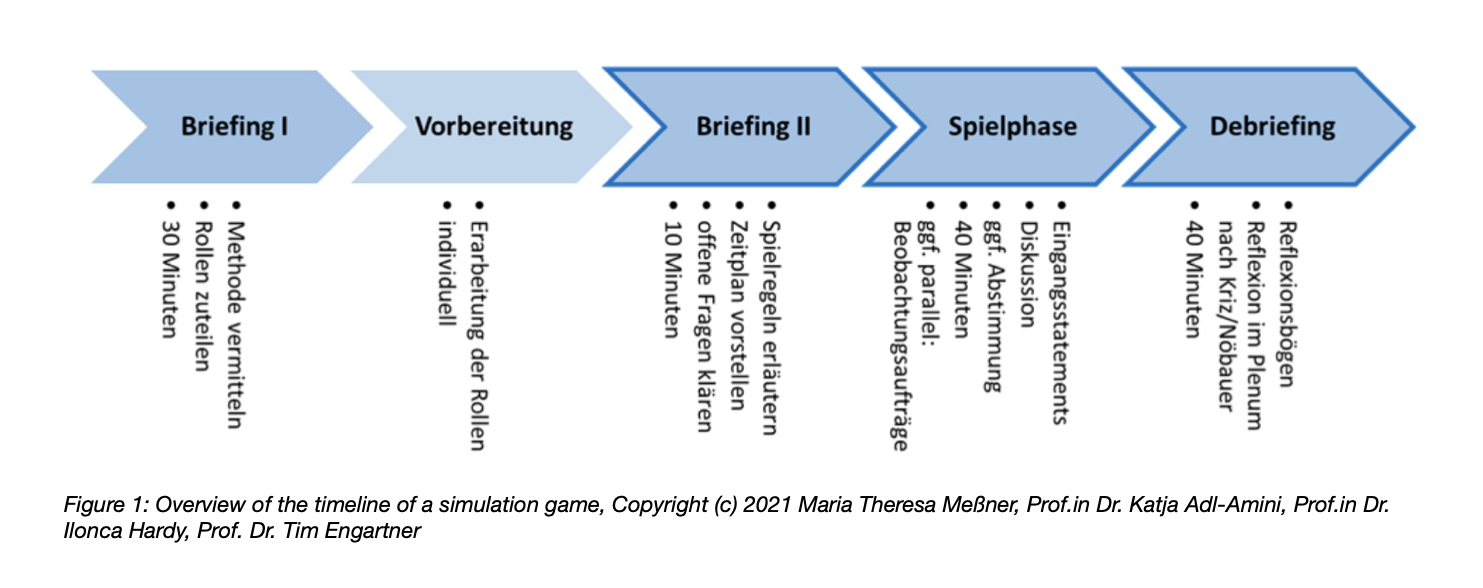
Learning with simulation games is becoming increasingly important in school and non-school education. By simulating negotiation and decision-making processes, participants can experience and understand complex relationships in a self-effective way. Learners take on the roles of various actors and gain insights into a wide range of interests and interactions. Simulation games present solution-oriented and realistic situations and can encourage an understanding of political and social processes, the development of compromise, cooperation and sustainable conflict management.
The plan is to test the first simulation game in October 2026 with students from the University of Education in Freiburg.
LULUCF stands for Land Use, Land-Use Change, and Forestry. It is about how we use land and forests. It looks at how trees, soil, and plants take in or release carbon dioxide. LULUCF rules help countries track their greenhouse gas emissions and storage.
ESPR stands for Ecodesign for Sustainable Products Regulation. It is a European law. It helps make products more environmentally friendly. ESPR sets rules so products last longer, can be repaired, and are easier to recycle.
To move closer to the goal of an established circular economy, the European Commission adopted an Ecodesign Directive as early as 2005, which was replaced in 2024 by the new EU Regulation on the Ecodesign of Sustainable Products (ESPR). In addition to focusing on longer product lifespans, recyclability, and repairability, the first step—aimed, among other things, at better coordinating these efforts—is the implementation of a Digital Product Passport (DPP). This is intended to help consumers and businesses make sustainable product choices based on easily accessible product-related data. The digital label will be mandatory for nearly all products in European Union countries and is intended to include not only information on the production process or origin but also disposal recommendations, repair, and recycling options (European Union, 2024). In summary, the DPP is intended to serve as a transformative tool to implement the circular economy, close information gaps along the value chain, and lay the groundwork for efficient and well-established recycling processes (Karabulut et al., 2025).
References:
Karabulut, A. N., Çalıkoğlu, G., Bulut, Z. A., Karabulut, A. N., Çalıkoğlu, G., & Bulut, Z. A. (2025). Discussing and Reviewing the Digital Product Passport: An Up-to-Date Bibliometric Analysis. Sys- tems, 13(11). https://doi.org/10.3390/systems13110930
https://single-market-economy.ec.europa.eu/single-market/digital-product-passport_en