
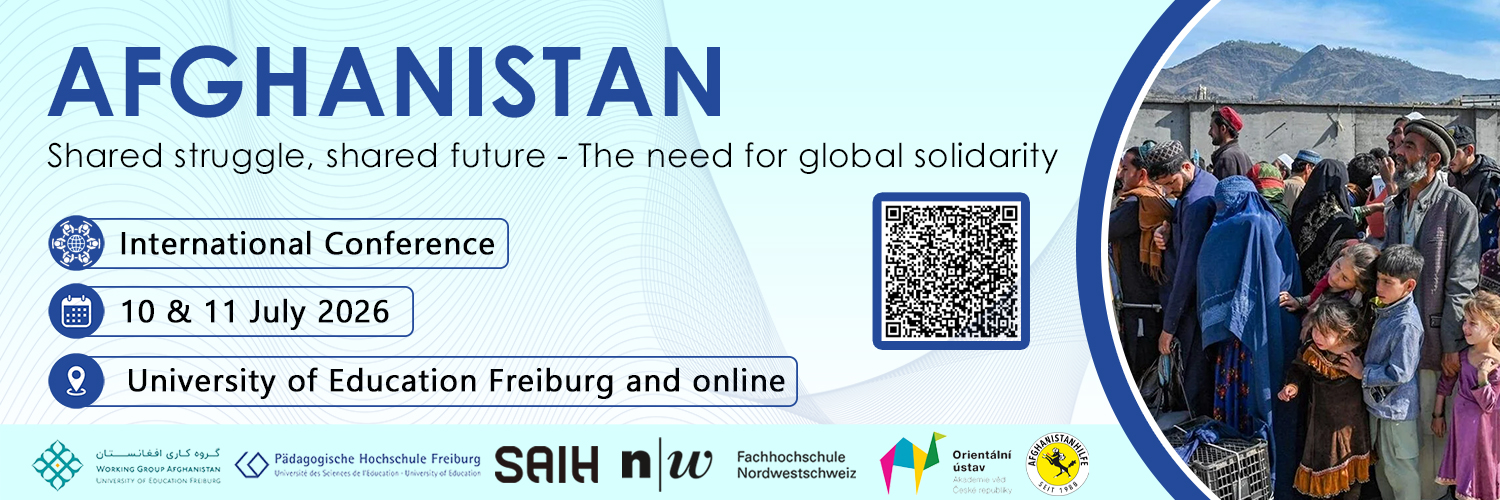
6th Conference on Afghanistan - 10-11 July 2026
Afghanistan: Shared struggle, shared future - the need for global solidarity
We warmly invite you to attend and participate in the 6th Conference on Afghanistan at the University of Education Freiburg on 10th to 11th July 2026 - online and onsite.
This conference is grounded in the understanding that the suffering of the Afghans is not only their own problem. It is a human tragedy whose consequences can extend far beyond Afghanistan’s borders. Supporting Afghans inside and outside the country requires an evidence‑based understanding of their challenges and a global solidarity.
It has been nearly five years since the former government of Afghanistan collapsed and the Taliban took power for the second time on August 15, 2021. Since then, life for people inside the country has become a struggle for survival. Afghans are facing deepening poverty, widespread unemployment, and a systematic campaign of discrimination that has turned daily life into a series of closed doors. The most heartbreaking reality is that Afghan women have been deprived of even the most basic right to a normal life. The struggle is not confined to Afghan soil. Over the past years, thousands have been forced to leave, carrying their talents and dreams with them. They are trying to rebuild their lives from scratch, even as their hearts remain in their homeland. Yet amid this hardship, there is a silver lining. Some of the Afghan diaspora have become an invaluable human resource for their country, serving as a powerful bridge between Afghanistan and the actors and organizations supporting Afghans, especially women, inside the country. From online training programs to grassroots advocacy, international organizations and the Afghan diaspora are finding creative ways to keep hope alive for those still living in Afghanistan.
We’ve invited experts, activists, and policymakers to discuss the current challenges Afghans face both inside and outside the country, grounded in research and precise analysis. This conference offers an opportunity to hear from researchers and activists who understand the realities on the ground, to connect activists and international organizations with the Afghan diaspora for clearer insights and more effective cooperation, and to explore new ways to support Afghans, especially the women who are currently being marginalized in Afghanistan.
Keynote speakers
Dr Sima Samar is a Right Livelihood Awardee, "Nobel Peace Prize nominee, renowned human rights advocate and an identified global influential female figure, Dr. Sima Samar has dedicated her life to public service, humanitarian work and women’s empowerment. Since 2002 she has been the Chairperson of the Afghanistan Independent Human Rights Commission (AIHRC) which holds human rights violators accountable and sets the human rights agenda in Afghanistan. Alongside this, Dr. Samar is the Chairperson of the Commission for the Prevention of Torture and was the Chairperson of Asia Pacific Forum of National Human Rights Institutions (APF).
Prior to her appointment as the chair of AIHRC, she was the Vice President of the Interim Administration of Afghanistan and the first Minister of Women’s Affairs. Dr. Samar served as the United Nation’s Special Rapporteur on the situation of human rights in Sudan between 2005 and 2009 and has been appointed as a member of the United Nation’s Secretary-General’s High-Level Advisory Board on Mediation. Samar also served as a member of High-Level Panel for Internal Displacement.
Her commitment to her community is evident through her NGO Shuhada Organization’s work in operating 55 middle and high schools for girls and boys in Afghanistan, and three schools in Quetta, Pakistan for Afghan refugees. In addition to this Shuhada operates 12 clinics and three hospitals in Afghanistan and one hospital in Quetta for refugees, dedicated to providing education and healthcare, particularly focusing on women and girls. Shuhada organization was also training women on different skills and promoting their empowerment to enable them to stand on their own feet including midwives’ female nurses and a lot of income projects. Shuhada organization continues the work and building schools in remote parts of the country where no other organization goes there.
Dr. Samar has continuously advocated for the world’s under-represented and marginalized groups such as women, children and minorities, with the firm belief that respect for human rights and human dignity, equality between the people and access to justice will change the reality in the ground and reduce the conflicts." (David Center of Harvard University)
Title: The Afghan Diaspora in Germany and Switzerland: What we know and what we don’t know?
Afghans form one of the largest diaspora communities in Germany and Switzerland. In these countries, they have encountered a mix of significant integration challenges and promising opportunities. This presentation examines how Afghan diaspora navigate these processes. Drawing on existing research and available data on the Afghan diaspora in both contexts, the researchers discuss current trends, point to gaps in the literature, and outline areas where further research is needed.
Dr. Thomas Geisen is Professor for Workplace Integration and Disability Management at the University of Applied Sciences and Arts Northwestern Switzerland, School of Social Work. He is widely published in migration, workplace integration/disability management, social work and social theory. Contact: thomas.geisen@fhnw.ch, further information: www.fhnw.ch/de/personen/thomas-geisen
Maria Bernadetta Jastrzebska, MA is a Research Associate at the School of Social Work, University of Applied Sciences and Arts Northwestern Switzerland (FHNW), and Innovation Management Consultant at Oeko Service GmbH. Her work focuses on solidarity research, work and health, and organizational development. She is also Coordinator of the Solidarity Research Network. Contact: mariabernadetta.jastrzebska@fhnw.ch ; more information: https://www.fhnw.ch/en/social-work/about/portrait-organisation/people/maria-bernadetta-jastrzebska
M. Baqer Zaki is a sociologist with experience working in both governmental and academic institutions in Afghanistan. He served as a lecturer and as Vice-Chancellor for Research at Gawharshad University in Kabul. Since 2022, he has been cooperating with the Working Group Afghanistan at the University of Education Freiburg on various educational and research projects related to Afghanistan, including a project on the integration of Afghan academics into the German job market.
Ajmal Behmanish holds a Ph.D. in Social Sciences from the Technical University of Darmstadt, Germany, and specializes in education and higher education governance, socialization and participation dynamics, and social inequalities, with a focus on Afghanistan. He is a member of the Working Group Afghanistan and has served in advisory roles within Afghanistan’s Ministry of Education, working closely with international organizations.
“A Sociolinguistic Study of Transnational Afghan Diasporas in Germany”, examines the
everyday language practices of the transnational Afghan diaspora within a new linguistic and
social environment. As Afghan migrants bring a variety of linguistic identities and practices
with them, the study examines how these diverse language backgrounds influence their
interactions in everyday life in Germany.
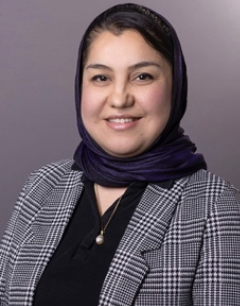
Somaiya Meer, M.A. is a former associate professor at Kabul University and a current PhD candidate at the European University Viadrina. She is honoured to be a scholar of the DAAD Hilde Domin scholarship program, which supports students and researchers at risk. She holds a
Master's degree in Teaching English to Speakers of Other Languages (TESOL) and a Bachelor's degree in English Language and Literature. In addition to her teaching position, she worked at Kabul University's Information Technology Centre, where she translated and edited the university's daily news website. Her academic articles, which explore topics such as linguistic landscapes, language variation, and identity in relation to migration, have been published in Kabul University’s scholarly journal. She has a broader interest in the fields of linguistics and sociolinguistics and in the sociocultural intersections of language, migration and integration within a transnational context
Shaharzad Akbar is the Executive Director of Rawadari, a human rights organization dedicated to Afghanistan. A prominent activist currently in exile, she previously served as the Chairperson of the Afghanistan Independent Human Rights Commission and has a diverse professional background spanning human rights advocacy, media, and development issues in Afghanistan. Her leadership experience includes serving as the Country Director for Open Society Afghanistan and holding senior positions in the former Afghan government.
An influential voice on human rights, Shaharzad has briefed the United Nations Security Council (UNSC) on multiple occasions and engaged extensively with the UN Human Rights Council to advocate for accountability and a dignified and lasting peace for all Afghans.
Shaharzad is an Honorary Fellow of Wolfson College, University of Oxford, and Academy Faculty with Chatham House. She has been published by Afghan and international outlets including The Washington Post,Foreign Affairs, Just Security and Justice Info.
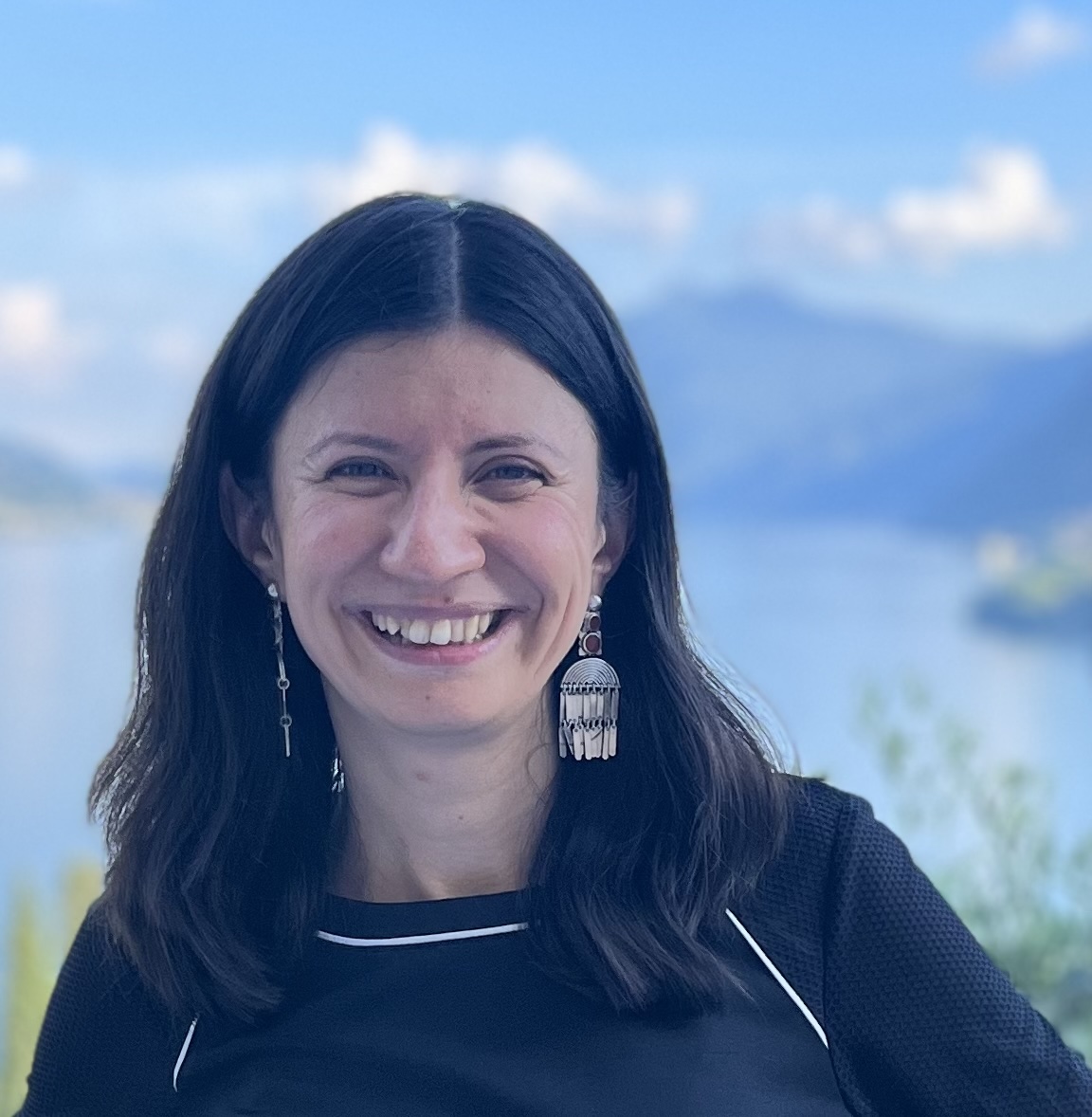
Torunn Wimpelmann is a Research Director at Chr Michelsen Institute (CMI). Her work has focused on the intersections between gender, law and politics in Afghanistan. She has published extensively on the Afghan women’s movement, Afghan law and legal practices, gender politics and masculinities and NATO warfare and diplomacy in Afghanistan. She is the author of The Pitfalls of Protection: Gender, Violence, and Power in Afghanistan
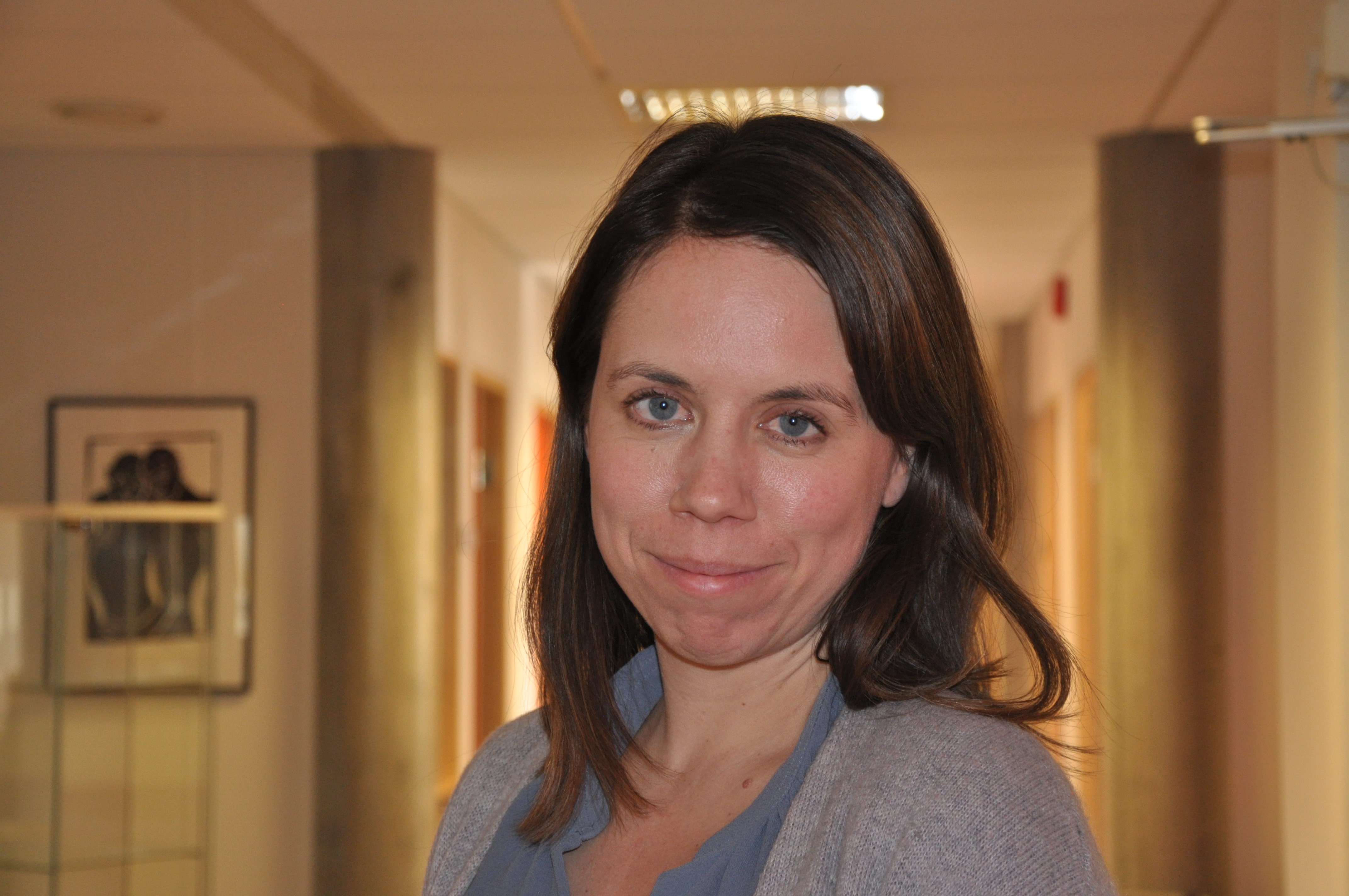
Thomas Ruttig studierte Afghanistik an der Humboldt Universität zu Berlin und der Universität Kabul. Seither arbeitet er zu Afghanistan, davon 13 Jahre lang im Land: für die DDR- und später die gesamtdeutsche Botschaft; als politischer Mitarbeiter der UN-Missionen UNSMA und UNAMA in Kabul, Islamabad und Gardez; als stellv. EU-Sonderbeauftragter für Afghanistan in Kabul und bei der Stiftung Wissenschaft und Politik in Berlin. 2009 begründete er die unabhängige Forschungsorganisation Afghanistan Analysts Network (Kabul/Berlin: www.aan-afghanistan.org) mit, deren Ko-Direktor er bis 2021 war. Seither ist er im aktiven Ruhestand, ist weiter publizistisch tätig und bloggt zu Afghanistan unter https://thruttig.wordpress.com. Er spricht Dari und Pashto.
Keynote: In Afghanistan haben die Taleban ihr Islamisches Emirat militärisch und politisch konsolidiert und bauen den afghanischen Staat systematisch auf der Grundlage (Ihrer Lesart der Scharia) um. Sie errichteten eines der menschenrechtsfeindlichsten Regime weltweit. Das Land befindet sich in einer Situation vertiefter, z.T. chronischer multipler Krisen. Den Taleban gelang es inzwischen zwar, den Verfall der Wirtschaft nach ihrer Machtübernahme und dem Stopp westlicher Transferleistungen zu stoppen, sie konnten die Abwärtsentwicklung aber nicht umkehren. Landesweit nahm die Armut extreme Ausmaße an. Gleichzeitig ist eine organisierte Opposition kaum zu erkennen.
Literatur zur Vorbereitung:
- Thomas Ruttig, “Politisch gefestigt, wirtschaftlich auf wackligen Beinen, humanitär katastrophal“, Asylmagazin 3/2026, Themenschwerpunkt Afghanistan. Online unter: https://thruttig.wordpress.com/2026/04/24/lesehinweis-themenschwerpunkt-afghanistan-im-asylmagazin/
- Susanne Schmeidl, “Continuity and innovation in the Taliban’s state-building project: insights from four years of ruling Afghanistan”, in: Conflict, Security & Development, Volume 25, Issue 6 (2025): https://www.tandfonline.com/toc/ccsd20/25/6
- Blog Afghanistan Zhaghdablai: https://thruttig.wordpress.com.
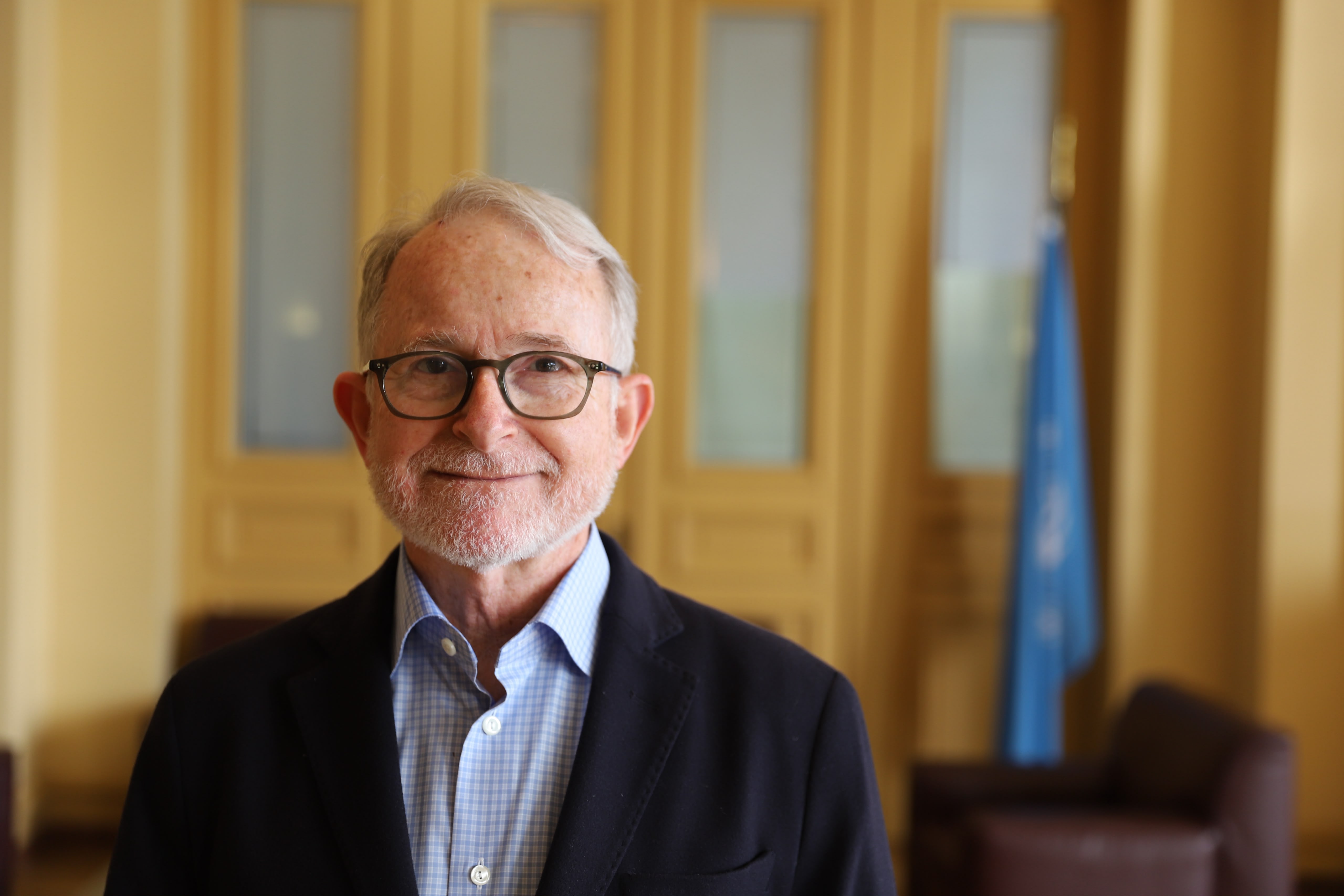
On 1 April 2022, Mr. Richard Bennett was appointed as the Special Rapporteur on the situation of human rights in Afghanistan. He officially assumed duties on 1 May 2022.
Mr. Bennett has served in Afghanistan on several occasions in different capacities including as the Chief of the Human Rights Service with the United Nations Assistance Mission in Afghanistan (UNAMA). He has previously played a role in the promotion and protection of human rights in Afghanistan and supported the United Nations on a number of human rights issues, such as protection of civilians, transitional justice, child rights, rule of law, rights of people with disabilities, protection of human rights defenders and a range of economic, social and cultural rights.
Mr. Bennett also served with the United Nations as the Representative of the High Commissioner for Human Rights and head of the human rights components of peacekeeping operations in Sierra Leone, Timor-Leste, and South Sudan as well as twice in Afghanistan (2003-07 and 2018-19). He has been a long-term adviser to the Afghanistan Independent Human Rights Commission.
From 2007 to 2010, Mr. Bennett was the Representative of the High Commissioner for Human Rights in Nepal and head of OHCHR’s office there. He has also been Chief of Staff for the UN Secretary-General’s Panel of Experts on Sri Lanka and Special Adviser to the Assistant Secretary General for Human Rights in New York.
Mr. Bennett worked for Amnesty International from 2014 – 17 initially as its Asia-Pacific Program Director and later as head of Amnesty’s United Nations Office in New York. From mid-2019, he worked as a consultant on UN human rights assignments in Afghanistan, Myanmar and New York.
Mr. Bennett is currently a visiting professor at the Raoul Wallenberg Institute in Lund, Sweden. (Bio derived from OHCHR)
“Collaborative poetics”: Doing responsible Afghan diaspora research in Berlin
Manja Stephan, Humboldt-Universität zu Berlin
What does diaspora research look like when it is conducted not about people from Afghanistan, but with them—and when it seeks to learn from their experiences? This presentation explores a shift away from ‘diaspora’ as a vague and politically charged analytical category towards the lived realities of migration, belonging, and displacement among people from Afghanistan living in Berlin. Drawing on initial findings from the ongoing collaborative project Berlin Belonging, in which students from Humboldt-Universität zu Berlin and young poets from Afghanistan engage in a poetic dialogue on migration, belonging, and living together in Berlin, I reflect on questions of social (in)visibility and participation, academic representation, and responsible scholarship.
Manja Stephan is Professor of Transregional Central Asian Studies at the Institute for Asian and African Studies at Humboldt-Universität zu Berlin, with a research focus on mobility, migration, Islam, and diaspora artivism. Her latest monograph, Muslim Mobilities. Geographies of Piety and Belonging in Tajik Dubai Business, was published by DeGruyter in 2025.
Panel discussions
Day 1: Between anxiety, empathy, and support: How Afghans in Diaspora could help those inside the country
Panelists – Mahdi Zaki (SAIH), Adrian Ackermann (Afghanistanhilfe, Schweiz), Farkhonda Mohsini & M. Javad Salehi (Working Group Afghanistan), Sadiq Zartila (Refugee Council Baden-Württemberg e.V. tbc)
Moderator: Uwe H. Bittlingmayer (UoEF/WGA)
Day 2: Women's education in Afghanistan under the Taliban
Panelists - Thomas Ruttig (Afghanistan Analyst Network), Torunn Wimpelmann (Chr Michelsen Institute), Shaharzad Akbar (Rawadari), Richard Bennett (Raoul Wallenberg Institute)
Moderator: Mahdi Zaki (SAIH)
Workshops
Presenters: Zeynep Islertas (Freiburg), Uwe H. Bittlingmayer (Freiburg), Thomas Geisen (Olten), Maria Jastzebska (Olten)
The Afghan diaspora in Germany startet in the 1960's. Since then several 'waves' of immigration, following different political events, are differentiated in the literature. The last 'wave' was between 2013 and 2017, during the so-called refugee crises. In the workshop the relationship between the different generations of Afghan migrants shall be discussed commonly. The discussion will guided by qualitative interview material in which the experiences of Afghans who came during the refugee crises is represented.
Asadullah Jawid (Ingolstadt) & Nasrullah Shojaee (Erfurt): Introduction to Prompt Writing with a Focus on the Basic Needs of the Afghan Diaspora in Germany
Presenters: Ingeborg Baldauf, Ahmad Azizy, Katja Mielke
The workshop aims to discuss changes that have taken place in Afghanistan research from disciplinary, content-related, ethical and funding perspectives since the 1970s and invites all participants to reflect on the reasons for the detected changes. To achieve this, it starts out with the panelists' personal reflections on research they have conducted in Afghanistan over the last decades at different points in time and from distinct study backgrounds. Other points the panelists aim to address include
- Afghanistan in peaceful times??? (has it ever been peaceful?)
- Considerations of research ethics (funding, ethical reasoning at home institutions, working with whom and how, dealing with externally driven research agendas, embedded research...)
- Which topics will likely become relevant, and for whom, in 'truly' peaceful times?
The format allows for input and Q&A from/with the audience.
Presenter: Stefanie Harsch and participants of the research competency course for female Afghan graduates
Presenters: Thomas Loy (Prague, Berlin), Magnus Marsden (Sussex), Mateusz Kladisz (Krakow) & Mona Khademi (Prague)
Further information
Target group Afghans and researchers, lecturers, activists, researchers, politicians and anyone interested in Afghanistan …
Participation fees Free of charge
Location University of Education Freiburg
Kunzenweg 21, 79117 Freiburg
KA 101 (Arrival and Map) & online
Organizers Working Group Afghanistan at the University of Education Freiburg, SAIH, Fachhochschule Nordwestschweiz, Orientaini ustav
Contact afghanistan@ph-freiburg.de
Registration Please register for online and onsite participation here