
Working Group Afghanistan
Our projects
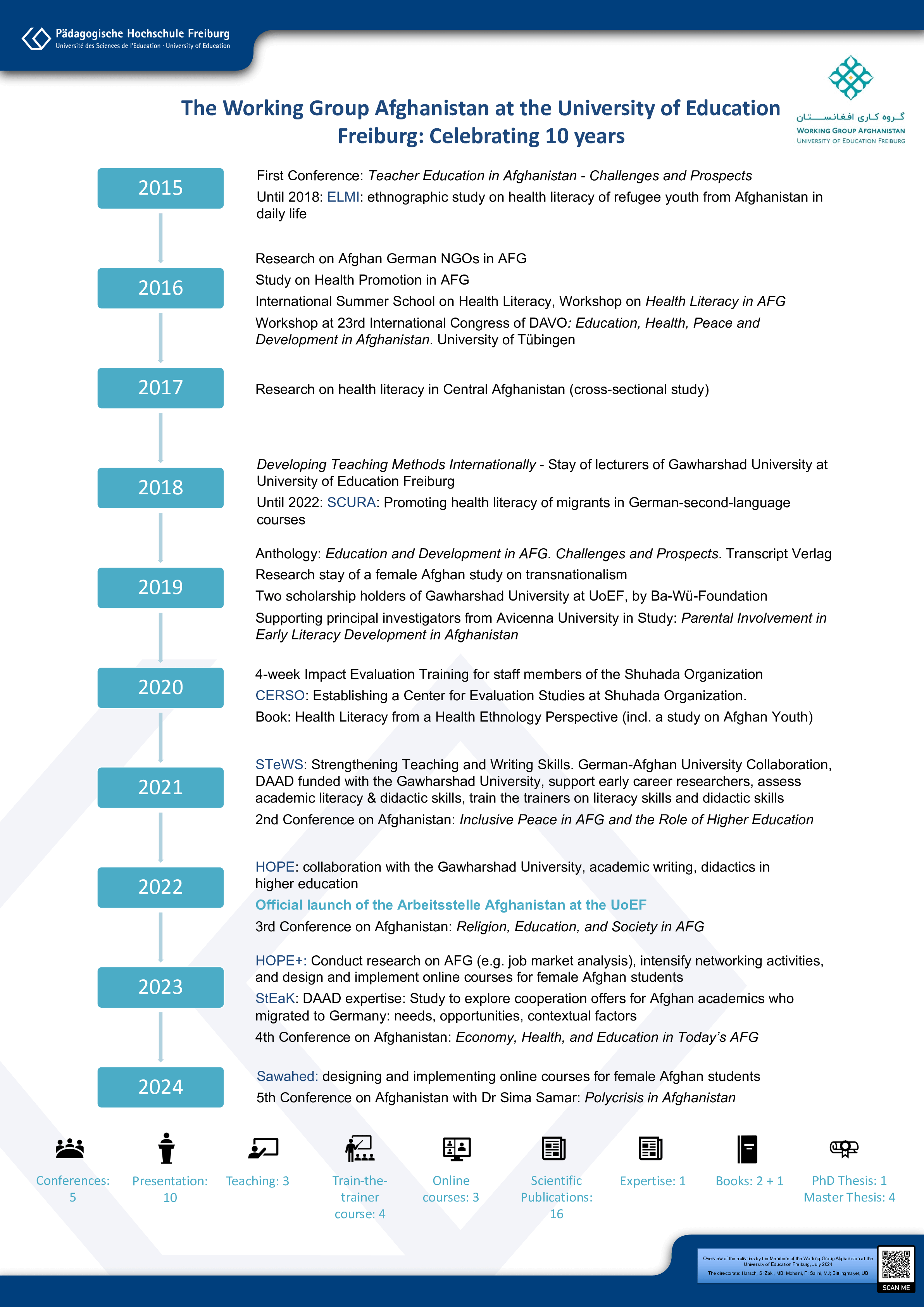
Since its establishment in 2014, we could complete numerous projects. Here you can inform yourself about completed and new projects.
Ongoing Research Projects
Since 2024: Sewahed: Securing Labor Market Opportunities for Women in Afghanistan in Higher Education. Here we are offering various online courses for Afghan women who dropped out of school Learn more about the courses
Since 2019: Research on the Afghan Diaspora
Completed Research Projects
- StEaK: "Studie zur Exploration akademischer Kooperationsangebote für geflüchtete Wissenschaftler*innen, Lehrende, Studierende und akademisches Verwaltungspersonal aus Afghanistan in Deutschland. Bedarf, Möglichkeiten, Rahmenbedingungen, Förderinstrumente" Study to explore academic cooperation offers for Afghan researchers, lecturers, students and academic staff who came as refugees to Germany: needs, opportunities, contextual factors, and support structures.
- 2023: HOPE+: we had to restructure our activities and are now focusing on research on Afghanistan, organizing a conference on Afghanistan, intensifying networking activities, and designing and implementing online courses for female students in Afghanistan. Find out more.
- 2022: HOPE: German Afghan University Collaboration: we continued our colloaboration with the Gawharshad University and jointly implemented the HOPE project.
- 2018-2022: SCURA: Promoting Health Literacy of migrants in German-second-language courses (Website)
- 2021: STeWS: Strengthening Teaching and Writing Skills. German Afghan University Collaboration: we implemented our first DAAD-funded project with the Gawharshad Universty, Kabul, Afghanistan
- 2020-2021: CERSO: Center for Evaluation Studies at Shuhada Organization. Training to improve impact evaluation skills.
- 2020: CERSO 4-week long Impact Evaluation Training
- 2019-2020: Avicenna University: Parental Involvement in Early Literacy Development. Supporting the PIs (Report)
- 2019: Two scholarship holders of Gawharshad University at University of Education Freiburg, supported by Baden-Württemberg-Foundation
- 2019: Research Stay of Sharifa Jawid, study on transnationalism
- 2019: Finalizing and publishing of Anthology "Education and Development in Afghanistan. Challenges and Prospects"
- 2018: "Developing Teaching Methods Internationally" - Stay of lecturers of Gawharshad University at University of Education Freiburg (Report)
- 2017: Research about Health Literacy in Afghanistan (cross-sectional study)
- 2016: Summer School zu Health Literacy, Workshop on Health Literacy in Afghanistan
- 2016: Study on Health Promotion in Afghanistan
- 2015-2018: ELMI - ethnographic study on Health Literacy of refugee youth from Afghanistan in daily life (Website)
- 2016: Research on Afghan German NGOs in Afghanistan
- 2015: Conference: Teacher Education in Afghanistan - Challenges and Prospects
Read about our completed projects
The members of the Afghanistan working group have always been involved in promoting education for Afghan students. Since the exclusion of female students from universities in Afghanistan in September 2021, members have been exploring ways to continue higher education for female students despite the restrictions.
Starting in 2023, we have been organising online courses for female students to enable them to acquire courses relevant to the labour market in Afghanistan and worldwide.
In 2024, we started collaborating with SAIH in the project Sewahed: Securing Labor Market Opportunities for Women in Afghanistan in Higher Education.
The courses are offered in cooperation with the Academy for Scientific Continuing Education of the JHW and the Freiburg University of Education.
Here you will find an overview of courses.
February 2026: Boost your English Language (Level B2)
January 2026: Develop your research competencies
January 2026: Boost your English Language (Level C1)
December 2025: IT Course focus on Networking
December 2025: Full Stack Web Development Course for Afghan Female Students
October 2024: Boost your English Language (Level C1)
October 2024: IT Course focus on Networking
July 2024: Full Stack Web Development Course for Afghan Female Students
October 2023: Architectural Principles and Professional AutoCAD for Female Afghan Students
May 2023: Introduction to Computers and Programming with Python Entry
The HOPE project is a German-Afghan university cooperation project and follows the STEWS project (1.Jan-31.Dec 2021).
The cooperation with Gawharshad University, which began in 2014 and was intensified in 2021 through a German-Afghan university cooperation project, could be continued in 2022 thanks to the support of the German Academic Exchange Service with funds from the German Foreign Office.
In this project, two of the previous focus areas could be continued and two new focus areas could be added as a response to the changed situation.
First, the focus is on improving academic writing skills through the establishment of a writing center and the training of writing consultants. Secondly, based on the needs analysis of the STEWS project, the certificate for higher education didactics could be modified and finalized to fit the new conditions in the academic higher education landscape in Afghanistan after the Taliban took over power. Lecturers are trained in a train-the-trainer approach and empower other lecturers in a certificate program adapted to the latest findings of teaching research, existing examples of good practice, and expressed wishes.
In addition, a second focus is on cooperation with Afghan scientists who came to Germany. On the one hand, a network will be established to support them in various matters (integration-related, private, professional, and scientific). On the other hand, a Working Group Afghanistan was established at the University of Education Freiburg, which will bundle the manifold activities concerning Afghanistan and where different activities such as lectures, advanced training, and joint research activities will be implemented. In close collaboration, we organize annual conference in December 2022 and November 2023
You will find recurring information on current activities here.
Participating universities, staff, and partners
PH Freiburg: Prof. Dr. Uwe H. Bittlingmayer, Dr. Stefanie Harsch, Dr. Gerd Bräuer, Marion Degenhart
Gawharshad University Kabul: seven colleagues (names not disclosed for security reasons)
Afghan researchers in Germany: Prof. Dr. Mohammad Jawad Salihi, Dr. Baqer Zaki
More than 50 students participated in the writing training courses. During the course, the trainers supported the students to develop a paper from the initial draft to the final manuscript. Below you find three great examples. We are very proud of the students' work and the remarkable improvement in their ability to write.
Student's Work A: Economic Cooperation Organization
Mursal Bakhtari, former student at Gawharshad University and participant of the writing skill training course, wrote an interesting paper on the Economic Cooperation Organization (ECO).
Here you find the summary of her paper in English.
Here you find her full paper in Dari.
Student's Work B: Principles of Marketing
Shabnam Bakhtari, former student at Gawharshad University and participant of the writing skill training course, wrote an insightful paper on the Principles of Marketing.
Here you find the summary of her paper in English.
Here you find her full paper in Dari.
Student's Work C: Tapi Project
Amina Bakhtari, former student at Gawharshad University and participant of the writing skill training course, wrote a well-written paper on the TAPI Project.
Here you find the summary of her paper in English.
Here you find her full paper in Dari.
Students Work D: A Collection of Scientific and Economic Articles
Mursal Bakhtari, former student at Gawharshad University and participant of the writing skill training course, wrote many articles and combined them in the "A collection of Scientific and Economic Articles".
Here you find the summary of her paper in English.
Here you find her full book in Dari.
Student's Work E: Effects of administrative corruption on economic activities
Shabnam Bakhtari, former student at Gawharshad University and participant of the writing skill training course, wrote an insightful paper on the "Effects of Administrative Corruption on Economic Activities in Developing Countries".
Here you find the summary of her paper in English.
Here you find her full paper in Dari.
Afghan-German university cooperation, supported by the DAAD with funds from the AA.
The objectives are
- promoting teaching skills through the development of a certificate on university didactics at the GU
- promoting writing skills and establishing a writing center at the GU
- planning and implementation of events on peace education for students from Germany and Afghanistan.
- conducting a study on peace education at Afghan universities.
- strengthening the collaboration between Afghan and German universities – at all levels.
Project time: 01.01.2021-31.12.2021
Collaborating partners
- University of Education Freiburg: Prof. Dr. Uwe H. Bittlingmayer, Stefanie Harsch, Gerd Bräuer etc.
- Gawharshad University Kabul: Dr. Mohammad Salehi, Khatira Khorrami, Sharif Akbari, Farkhonda Arshan, Ali Aeen,
- University of Applied Sciences Northwestern Switzerland: Prof. Dr. Diana Sahrai
Together we organized a Workshop on Inclusive Peace in Afghanistan and the Role of Higher Education on December 15th, 2021.
Publications
Harsch, S., & Akbari, S. (2026). Quality in Teaching and Lecturers’ Skills for Teaching in Higher Education – A Needs Assessment at Gawharshad University. In M. B. Zaki, S. Harsch, U. H. Bittlingmayer, & M. J. Salehi (Eds.), Religion, Education, Health, and Society in Afghanistan: Opportunities, Challenges, and Restrictions under Taliban Rule (pp. 129–146). edition tethys.
Harsch, S., Mohsini, F., Khorrami, K., & Bräuer, G. (2026). Academic Writing Skills of Students and Lecturers at Gawharshad University—A Needs Assessment. In M. B. Zaki, S. Harsch, U. H. Bittlingmayer, & M. J. Salehi (Eds.), Religion, Education, Health, and Society in Afghanistan: Opportunities, Challenges and Restrictions under Taliban Rule (pp. 99–116). edition tethys.
From March 2015 till December 2021 a research team at the University of Education Freiburg was part of a larger Consortium on Health Literacy in Childhood and Adolescence, funded by the German Federal Ministry of Research and Education.
Project management HLCA network:
Coordinator and project leader of the HLCA network project is Prof. Dr. Ullrich Bauer and Dr. Paulo Piehro from the University of Bielefeld, Faculty of Educational Science, AG: Social Research as well as Prof. Dr. Orkan Okan from Technical University Munich. The research network consists of nine subprojects (more information at: www.hlca-consortium.de).
ELMI: eHealth Literacy and Health of Minorities
eHealth literacy and minority health: an ethnographic study of the health-related benefits of new media among disadvantaged adolescents with Afghan immigrant backgrounds
Background
The ELMi research project was funded by the German Federal Ministry of Education and Research [funding code: 01EL1424E) and is part of the national research network "Health Literacy in Childhood and Adolescence (HLCA)". The aim of the research network is the development, testing and practical transfer of target group-specific, evidence-based and high-quality measures to improve health literacy (health competence) and the health of adolescents.
The use of new media, smartphones, social media, etc. has become an integral part of the everyday lives of young people (digital natives). They provide access to information for almost everyone, at least in theory.
However, recent research on the health behavior of adolescents has shown that health, social behavior and health skills differ significantly by gender, socioeconomic status, and migration background or ethnicity. This suggests that there are also (target) group-specific differences in social media use with unequal health consequences. However, there is little knowledge about the health-related use of social media among migrant youth in general and among refugee minors aged 14-17 with an Afghan migrant background in particular.
Purpose:
The main objective of the ELMi project was to find out exactly how the everyday use of the smartphone works with regard to the use of health information or digital offers (health apps) among disadvantaged adolescents.
The main research question was: What is the concrete interplay between cell phone use and different health dimensions among youth with Afghan refugee histories? At what points is the smartphone beneficial to health in everyday life, and at what points is it detrimental to health?
Method
The ELMi project represented an ethnographic study in which two adolescents with an Afghan migrant background, within three separate field and analysis phases, were accompanied in their everyday life. This ethnography was embedded in a kind of milieu study of refugee hostels in a large city in southern Germany.
Results
In the course of our close every day and extracurricular accompaniment of two Afghan adolescent refugees, it first became clear that the adolescents possessed many positive competencies in the sense of Aaron Antonovski, which are to be counted among the resilience factors. Furthermore, it became clear that an individualistic concept of adolescent health misses the reality of at least the two accompanied Afghan refugee adolescents and that instead, a stronger focus on family health would be necessary. This becomes particularly clear when an adolescent in a field phase defines health as a state in which his family is doing well. Finally, it can be stated that smartphones are very ambivalently associated with health in everyday life - on the one hand, they are helpful for acquiring the language and thus for orientation in the destination country, for example through translation programs. Thus, they provide direct health-promoting potentials. On the other hand, it was observed that (extensive) smartphone use promotes the already widespread lack of sleep among young people (increasingly in, but also outside of refugee accommodations).
Project Team:
- Prof. Dr. Uwe H. Bittlingmayer
- Main Researcher: Elias Sahrai
- Supporting Researchers: Zeynep Islertas, Stefanie Harsch
Publication:
Click on the following link for the results which are published in our book "Health Literacy from a health ethnographic perspective". The insights presented here are not exhaustive; not least because even after the ethnographic field phase as well as the interviews, (new) background information came to light that requires reinterpretation or reconsideration of the empirical findings.
The book is available in German and soon in English language.
Bittlingmayer, U. H., Islertas, Z., Sahrai, E., Harsch, S., Bertschi, I., & Sahrai, D. (2024). Health Literacy from a Health Ethnology Perspective: An Analysis of Everyday Health Practices of Migrant Youth and Families. Springer.
Bittlingmayer, UH., Islertas, Z., Sahrai, E., Harsch, S., Bertschi, I., & Sahrai, D. (2020). Health Literacy von geflüchteten, männlichen Jugendlichen aus Afghanistan und die Auslotung vorhandener Handlungsspielräume. In Health Literacy aus gesundheitsethnologischer Perspektive. Springer VS, Wiesbaden, pp. 185-218.
SCURA - Exploring and Promoting Health Literacy in Educational Settings
SCURA - Health Literacy Promotion of Migrant People in Language Courses
Background: Good health literacy is essential to make and implement good, health-relevant decisions. Research shows that especially newly immigrated people, such as Afghans, face multiple health-related perceived challenges. In order to access health services in the new country and respond to emerging health concerns, country-appropriate health literacy is necessary. Language courses can play an essential role in teaching this health literacy.
The research project SCURA aims to explore and improve the responsiveness of a language school setting to the competencies and concerns of immigrant people, especially immigrant people from Afghanistan. Here, people are conceptualized as endowed with multiple resources and analyzed how these resources and health-related issues are taught and reinforced in the classroom.
Methods: SCURA incorporates both ethnographic research methods and participatory intervention development. First, extensive literature reviews were conducted on health literacy promotion in language courses and health interventions for refugees/immigrants in Germany and translingual health literacy. Furthermore, interviews with teachers and participants were conducted and classroom activities were observed. In the next step, lesson plans were developed together with immigrants and training for teachers in language and integration courses as well as in the transition system are conducted.
Preliminary results: Health topics are very relevant for course participants and can be used very well to increase motivation for learning German. In addition to the course content and methodology, however, a variety of other factors are significant. These are, for example, the mission of the course, characteristics of the participants, role perceptions of the teachers, atmosphere, and cooperation within the course, the school setting as well as the general conditions. Lecturers are perceived as persons of trust and thus informed about health issues. However, there is uncertainty about how to deal with the health burdens of the course participants and the need for more teaching materials on topics such as the structure of the German health system, first aid, but also culturally sensitive addressing of behaviors that are harmful to health (diet and exercise). In particular, the aspects of 'feeling comfortable in the course' and self-esteem enhancement are crucial for health.
Conclusion: The study identified opportunities but also limitations of addressing and promoting health (literacy) in educational settings. In particular, the great relevance of communicating about health and disease topics in the German language and the high motivation for health topics suggest that more space should be given to this topic. So far, too little research has been done on the role of the two (or three) languages and cultures from which individuals come for the development and promotion of translingual, culturally sensitive health literacy.
SCURA Project
- Project Leader: Prof. Dr. Uwe H. Bittlingmayer
- Main Researchers Stefanie Harsch (language courses), Zeynep Islertas (Übergangssystem)
Further information on SCURA can be found on the project website: www.scura.info
Publications
Harsch, S. (2021), “Ein fremder, zweiter Blick auf Health Literacy - was uns die Zweitsprachendidaktik lehren kann. (A foreign, second look at health literacy - what second language didactic can teach us)”, in Rathmann, K., Dadaczynski, K., Okan, O. and Messer, M. (Eds.), Gesundheitskompetenz, Springer.
Harsch, S., Jonasson, L. and Stolwijk, L. (2021), “Förderung von Gesundheitskompetenz von zugewanderten Menschen in Zweitsprachkursen – Umsetzung, Begrenzung und Potenziale in Deutschland und weltweit. (Promoting health literacy of migrants in second language courses - current situation, limitations and potential in Germany and around the world)”, in Rathmann, K., Dadaczynski, K., Okan, O. and Messer, M. (Eds.), Gesundheitskompetenz, Springer.
Harsch, Stefanie (2022). Health literacy as a situational, social practice in context. Insights gained through three research projects among ‘vulnerable groups’. Freiburg, University of Education Freiburg. Dissertation
In February 2020, we organized a four week training course on Impact Evaluation for four selected members of the Shuhada Organization.
The training covered the following topics
- Theoretical and conceptual background of knowledge and impact evaluation
- Preparation: Manage, define and frame impact evaluation projects
- Concretize: Study design and measuring techniques
- Analyze, visualize, and present data
- Discuss and report findings
- Desigining an impact evaluation study
- (Implementing the impact evaluation in Afghanistan)
Moreover, we aimed at establishing a Center for Research and Evaluation at Shuhada Organization (CERSO).
Health Literacy in Ghazni, Afghanistan
Background: Studies worldwide show that health status is related to the health literacy of individuals. Practitioners in Afghanistan emphasize that health literacy among Afghans is very low and there is a great need for health education. The situation in Afghanistan is difficult to assess due to the lack of valid data and the fact that health research is mostly limited to the larger cities, while more remote regions are difficult to access and rarely researched.
METHODOLOGY: With high effort and in close cooperation with our external research partners from Afghanistan, a first quantitative study on the health literacy of individuals in Ghazni, Afghanistan was conducted using a globally used instrument, the HLS-EU-Q16. Quality of life, as well as numerous contextual factors and health practices, were also included.
Based on two multi-strategy randomized sampling methods, we generated two differentiated samples: on the one hand, we interviewed male household heads in the villages, and on the other, female patients or their female companions in a hospital in Ghazni. Two male and two female trained interviewers orally conducted a total of 824 interviews with individuals from four districts in Ghazni province. 502 men and 322 women participated in the study.
RESULTS: Health literacy levels measured with the HLS-EU-Q16 are comparatively low in Afghanistan, even by international standards. Behavioral indicators showed, for example, that it is common for women to wait up to two days after childbirth before breastfeeding their infant with breast milk and prefer feeding with oil first.
We identified weak to moderate correlations between the level of health literacy and determinants as well as behaviors.
Surprisingly, contrary to the widely documented association of educational level and health literacy, we could not empirically confirm this with our data from the male sample.
CONCLUSION: This study provided data on health literacy in a rural region in Afghanistan for the first time. The results highlight that in these districts in Afghanistan, the need for health-related information is high, and better health literacy is relevant to improve health-promoting behaviors. Environmental and income-related factors play a major role.
It is recommended to increase the education on health-promoting behaviors and to reflect anew on how the behavior can be learned successfully - independent of the educational standard. Initial approaches through health education in the hospital waiting room are to be recommended and expanded.
Publications can be found here
Harsch, S; Bittlingmayer, UH (2021): Determinanten von wahrgenommener Lebensqualität sowie der Zusammenhang von Lebensqualität und Dimensionen von Gesundheit und Gesundheitskompetenz von Menschen in Zentralafghanistan. In Martin Staats (Ed.): Lebensqualität. Ein Metathema. Weinheim, München: Beltz Juventa, pp 578-588.
Harsch, S; Jawid, A; Jawid, ME; Saboga-Nunes, L; Bittlingmayer, UH.; Sahrai, D; Sørensen, K (2021): Health Literacy and Health Behavior Among Women in Ghazni, Afghanistan. In: Frontiers in Public Health 9, S. 629334. DOI: 10.3389/fpubh.2021.629334.
Harsch, S; Jawid, A; Jawid, ME; Sahrai, D; Bittlingmayer, UH (2020): The Relationship of Health Literacy, Wellbeing and Religious Beliefs in Neglected and Unequal Contexts – Results of a Unique Study in Central Afghanistan. In Health Promotion Journal of Australia 32, S. 80–87. DOI: 10.1002/hpja.419.
Harsch, S; Jawid, A; Jawid, ME; Saboga-Nunes, L; Bittlingmayer, UH.; Sahrai, D; Sørensen, K (2020): Health without formal Education? Health Literacy, Quality of Life and Health behavior among Male Household Leaders in Four Districts of the Ghazni Province, Afghanistan. In Luis Saboga-Nunes, Uwe H. Bittlingmayer, Okan Orkan, Diana Sahrai (Eds.): New Approaches to Health Literacy. Linking Different Perspectives. Wiesbaden: Springer, pp. 261-287.
The University of Education Freiburg and the Gawharshad University (formerly Gawharshad Institutes of Higher Education), Kabul, Afghanistan, have had close contact and joint research projects (e.g., a study on health literacy in Afghanistan) since 2015. In order to improve the cooperation in further education, teaching, and research, eight lecturers of the Gawharshad University visited Freiburg under the title ‘Developing Teaching Methods Internationally’.
In June 2018, eight lecturers of the Gawharshad University travelled to Germany. Numerous encounters and guided tours allowed them to gain an insight into the structure, the administration, the offers and the designs of a variety of offered study programs. The program was planned and realized by Uwe H. Bittlingmayer, Johannes Lebfromm and Thomas Fuhr in close cooperation with a project by students of Adult Education, and it was financed, among others, by the Verfasste Studierendenschaft [Student Government] of the University of Education Freiburg. One main focus was the exchange about teaching and learning strategies and possible areas of cooperation.
The visit of the Afghan lecturers allowed the students to gain insights into the country and its educational institutions beyond mass media reports.
Furthermore, a writing center is going to be built at the Gawharshad University in the near future.
Further meetings are planned.
You can find a report on the lecturers’ visit and an overview of the program ‘Developing Teaching Methods Internationally’ from the magazine of the University of Education Freiburg here.
Health Promotion in Afghanistan
Background: Health is a very complex topic influenced by multiple aspects and the state of health cannot be attributed to one-dimensional relationships. But especially in a country like Afghanistan, where maternal and child mortality is very high and communicable diseases are very common, it is helpful to try to understand the health aspects, in general, more precisely and to identify possible starting points for improving health, such as health literacy. Within the framework of a small study (Master's thesis), we have examined the current health situation and the framework conditions using quantitative data, analyzed health-related interventions and the design of health-promoting interventions and care through qualitative interviews with local experts, as well as developed an overall view of health-relevant factors for the promotion of health in Afghanistan. The research was guided by the question: How is health promotion taking shape in Afghanistan and which approaches have shown promise and for what reasons?
Methodology: This mixed-methods study included a literature review (of research literature as well as grey literature from stakeholders in Afghanistan), 29 interviews were conducted, and feedback from 22 organizations on their health-related engagement in Afghanistan was analyzed.
Results: Data on health in Afghanistan as well as the availability of health-related interventions is very limited as well as dependent on the specific situation in each region (e.g. with regard to the security situation, medical/health care or availability of material resources, etc.). Countless actors (mainly NGOs) are involved and have developed programs in many areas. In view of the overall situation, it is of utmost importance that these are local offers, carried out by trustworthy persons, in the long term with good quality. Gender- and religion-sensitive offers are still relevant, as well as addressing the decision-makers in the family (e.g., the head of the household or the mother-in-law) and passing on health-related information from person to person.
Conclusion: In the past 15 years, a large number of interventions have been developed and implemented, but many have not been continued due to financial, political, or personal situations, and the generally project-based design has led to significant limitations in the sustainable implementation of interventions. From our point of view, it is crucial to continue existing, proven offers, to start with the health care system, to train local, trustworthy persons, and to pursue further ways - such as setting-related strategies, e.g. school health promotion.
The findings of this project were presented at the
DAVO Conference 2016 in Tübingen
and can be found in the master thesis
Harsch, S (2017): Health and Health Promotion in Developing Countries. A Case-Study on community-based Health Promotion Approaches in Afghanistan. Freiburg: University of Education Freiburg (Master Thesis).
Highly Motivated, Transnational, Heterogeneous, and Barely Interconnected: An Explorative Online Survey among German Organizations
Motivation/Background: It is undisputed that the situation in Afghanistan is characterized not only by local developments but also by the trans-state and transnational engagement of a wide range of actors, both at the political and military level, but also through the involvement of non-governmental organizations, private individuals and family members. Often overlooked, but of great relevance, is the engagement of people from Afghanistan who have emigrated abroad and who support their families and communities in various ways, for example financially and through projects. While the engagement between the states of Germany and Afghanistan has been documented several times, there is hardly any knowledge about the numerous engagement of non-governmental organizations.
Method: In order to fundamentally capture and describe this engagement, we conducted an online survey among 150 actors regarding their organizational form, their engagement, their stated motivation, and future perspectives.
Results: We identified more than 200 organizations that reported supporting activities in Afghanistan online. However, a considerable number were found to be active in Afghanistan for only a short period of time or could not be contacted. Succinctly summarized, engagement can be described as motivated, transnationally situated, heterogeneous, and poorly networked.
Of the organizations participating in this survey, most are registered as registered associations or non-governmental organizations with varying membership sizes (mostly under 26) and significantly varying numbers of staff (0-2000). The composition of the founding members reflects a high level of commitment on the part of Afghan exiles. Overall, all regions are supported by people from Germany, but the commitment accumulates in larger cities and most organizations have a strong focus on one region and few but diverse projects. The most common form of support is financial contributions, training, and technical advice, as well as coordination and donations in kind. The most frequently cited motivating reason is to contribute to the reconstruction and to support people in need.
Engagement sector: the main target group of engagement is women and children and the sectors where high engagement was shown are education and health.
The organizations get involved in the areas of improving the education system, equipment, and facilities. The focus here is on practical assistance such as the construction of classrooms and the provision of teaching materials, but also on improving school management, transport for teachers/students, financial support for students, and improving the school curriculum. In-service training for teaching staff is given just as much attention.
With regard to current and future developments, the organizations indicated that they would continue their involvement despite the deteriorating security situation and impairments due to corruption, hopelessness, poor governance, and worsening economic situation because they had good contacts on the ground and were able to record visible successes.
When asked about the areas in which Germany could be involved in Afghanistan in the future, they primarily emphasized the importance of vocational and school education as well as the strengthening of civil society, but at the same time placed great value on the supply of water and also involved in the security sector.
Discussion/Conclusion:
The engagement in Afghanistan of people living in Germany is driven by humanitarian reasons, continues to be high, and covers many areas with a focus on particularly 'vulnerable' groups such as women and children. Whether and how these 'empowered' target groups can shape their future, however, depends heavily on the political, geographical, and security-related framework conditions. Therefore, it is highly relevant that supporting individuals and improving contextual factors go hand in hand.
Publications:
Harsch, S; Bittlingmayer, UH (2019): Highly Motivated, Transnational, Heterogeneous, and Barely Interconnected: An Explorative Online Survey among German Organizations. In: Bittlingmayer, Uwe H. et al. (eds): Education and Development in Afghanistan. Challenges and Prospects, Bielefeld: transcript, pp.79-101.